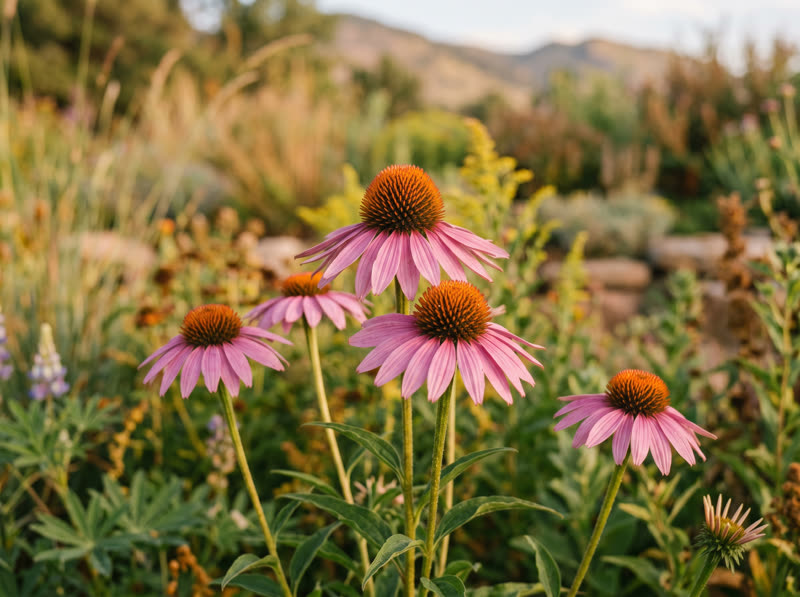
Purple Coneflower
Echinacea purpurea
Full sunLow waterJun–Sep3 ft
A Front Range workhorse. Feeds bees, finches love the seed heads in winter. Cut back hard in early spring.
Colorado Springs sits on the edge of USDA zones 5b and 6a, with thin air, high UV, alkaline clay, and wind that breaks unprepared plants. Every species below has earned its place in our landscapes by surviving those conditions — and thriving.
Echinacea purpurea
A Front Range workhorse. Feeds bees, finches love the seed heads in winter. Cut back hard in early spring.
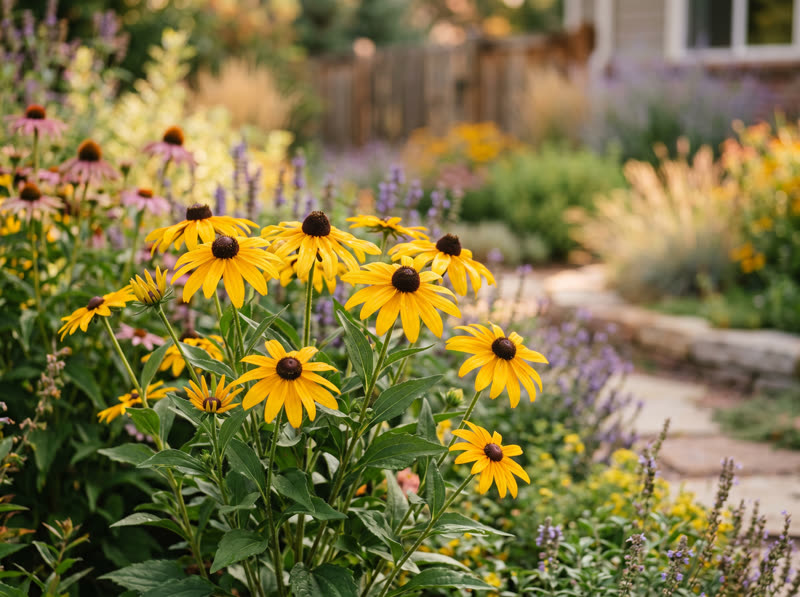
Rudbeckia fulgida 'Goldsturm'
Gold bloom straight through the first frost. Divides easily every 3–4 years.
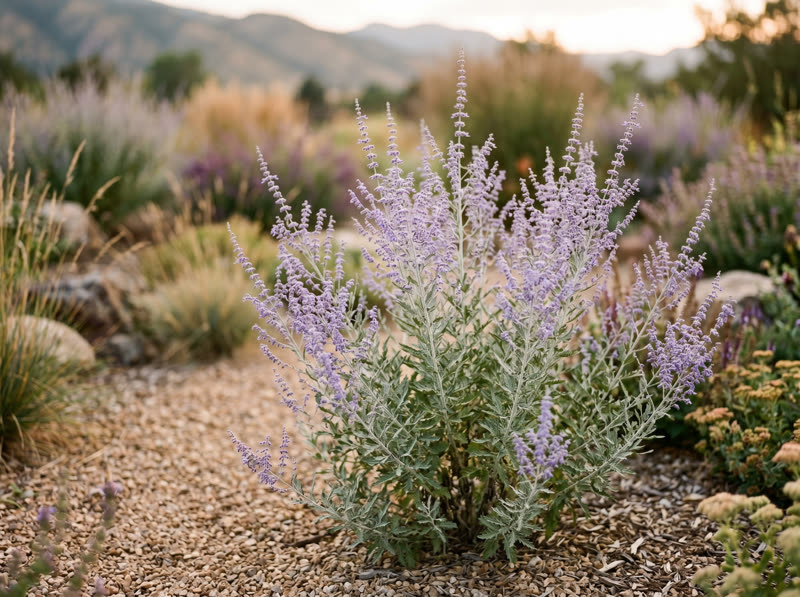
Perovskia atriplicifolia
The backbone of Colorado Springs xeriscape. Silver foliage, lavender bloom, deer-proof. Needs well-drained soil.
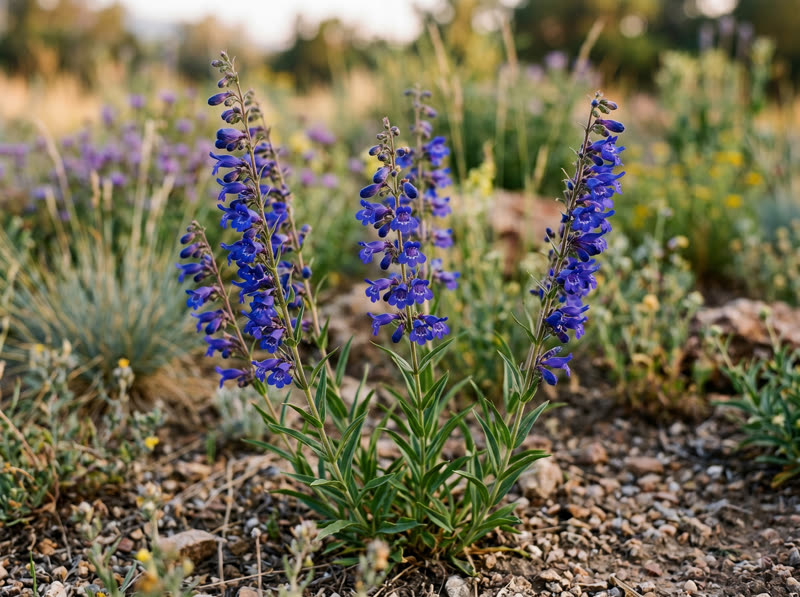
Penstemon strictus
Native. Deep blue tubular flowers, hummingbird magnet. Hates wet winter feet — plant in gritty soil.
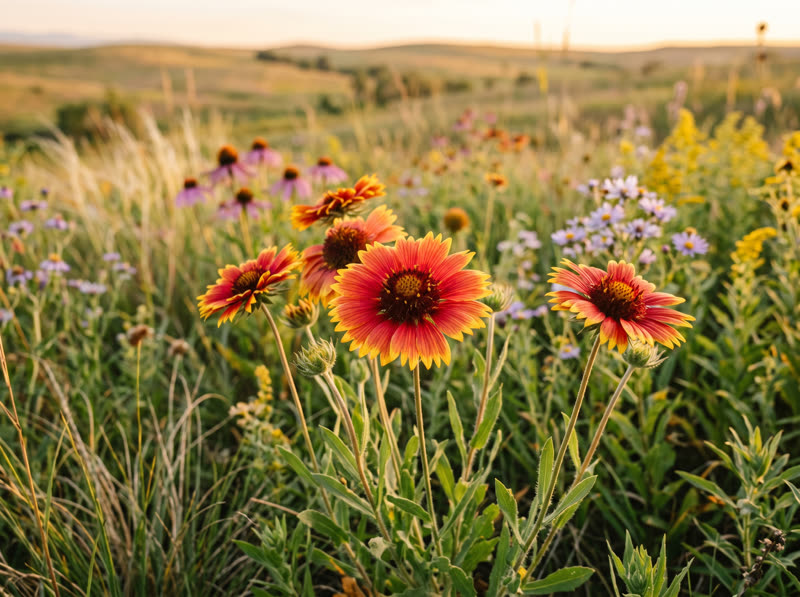
Gaillardia aristata
Colorado native. Red-and-gold pinwheels from early summer to hard frost. Self-sows gently.
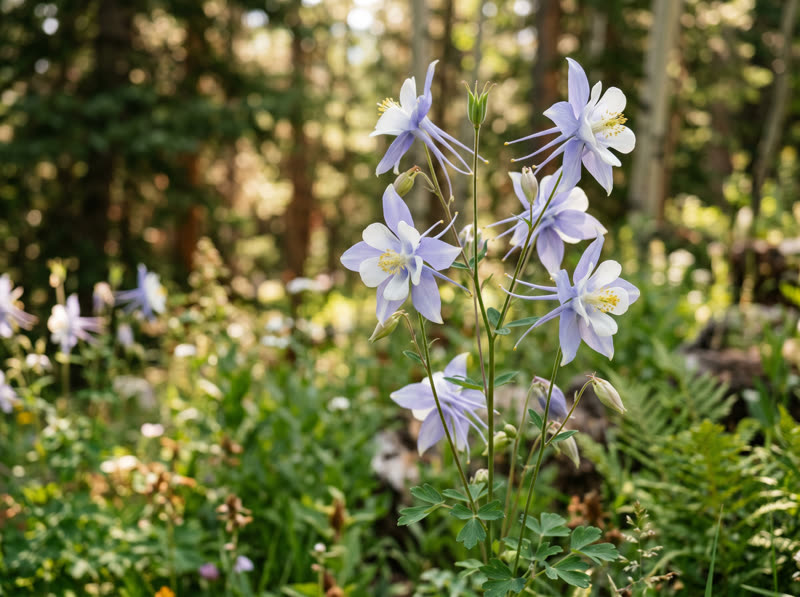
Aquilegia caerulea
The state flower. Prefers morning sun, afternoon shade. Reseeds in happy sites.
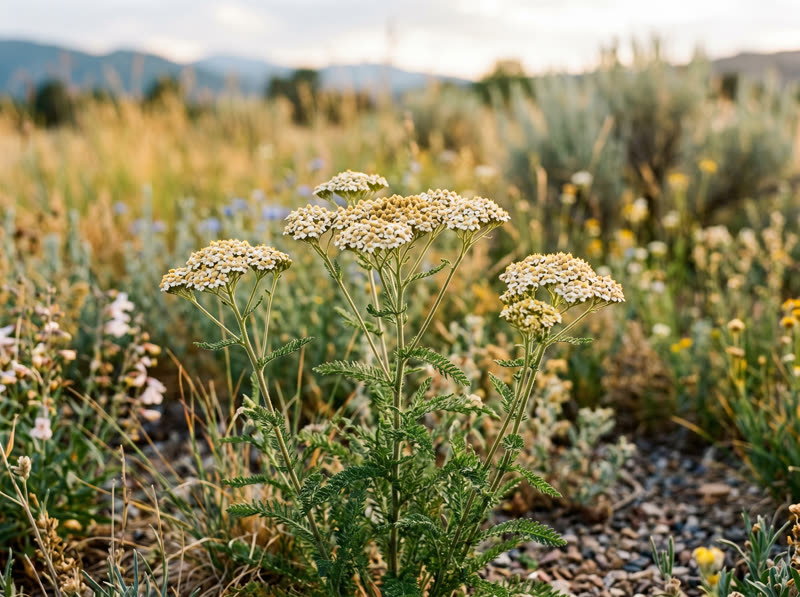
Achillea millefolium
Ferny foliage, flat corymbs in white, gold, and coral. Handles poor soil, thrives on neglect.
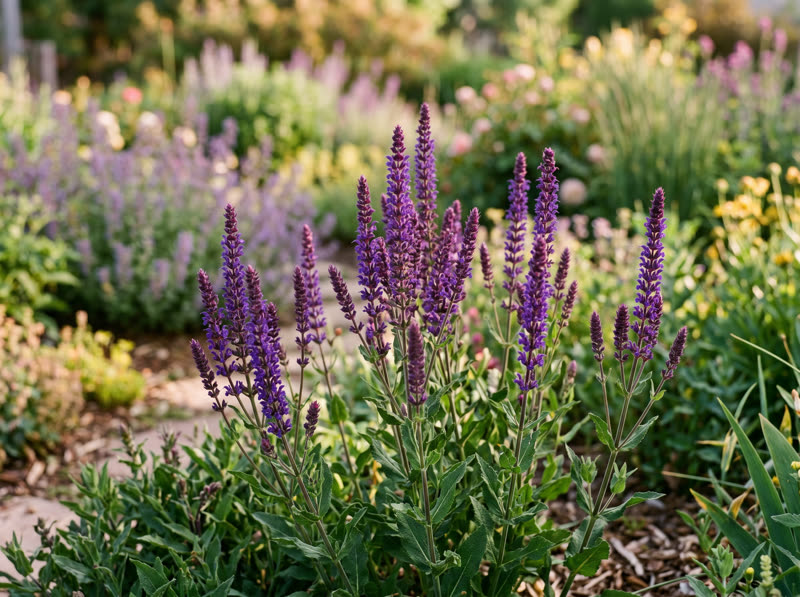
Salvia nemorosa 'Mainacht'
Deep violet spikes in late spring. Cut back after first bloom for a second flush.
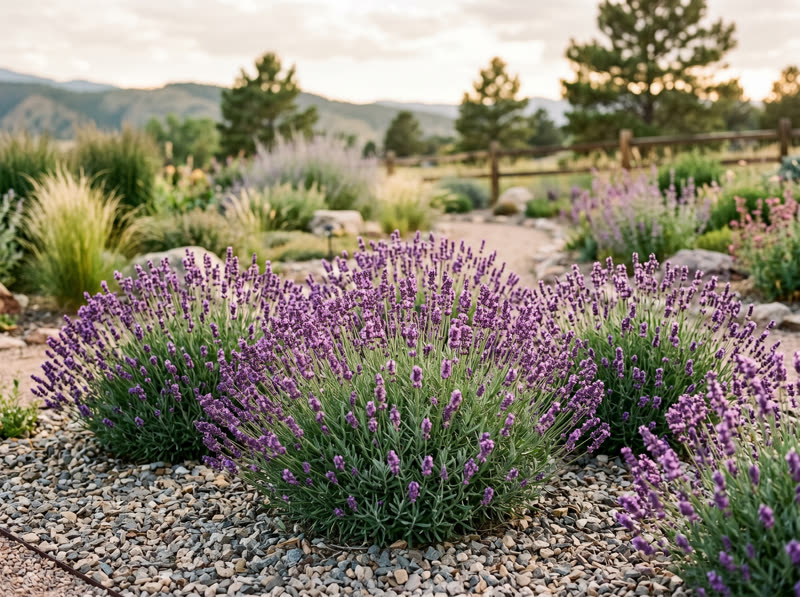
Lavandula angustifolia 'Munstead'
Munstead and Hidcote survive Colorado winters best. Needs excellent drainage and a gravel mulch.
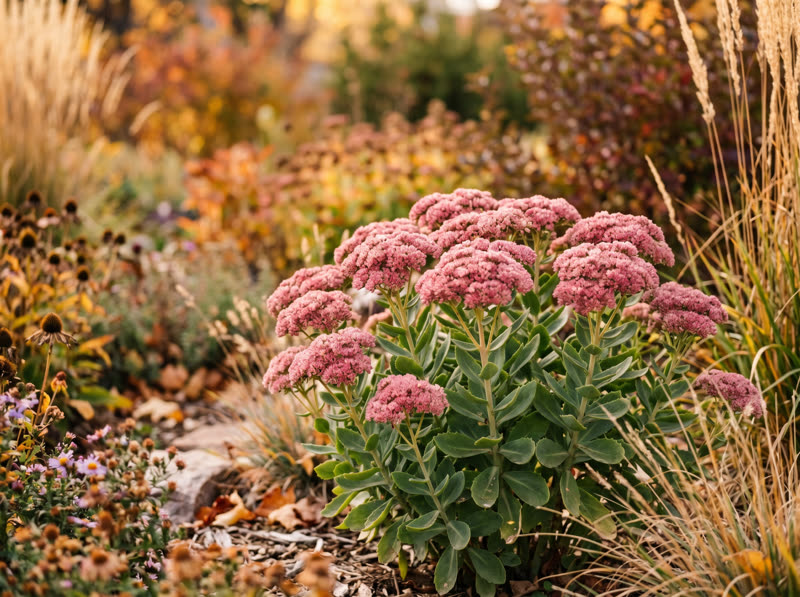
Hylotelephium 'Herbstfreude'
Broccoli-like buds in July, dusty rose bloom in September, rust-brown seed heads all winter.
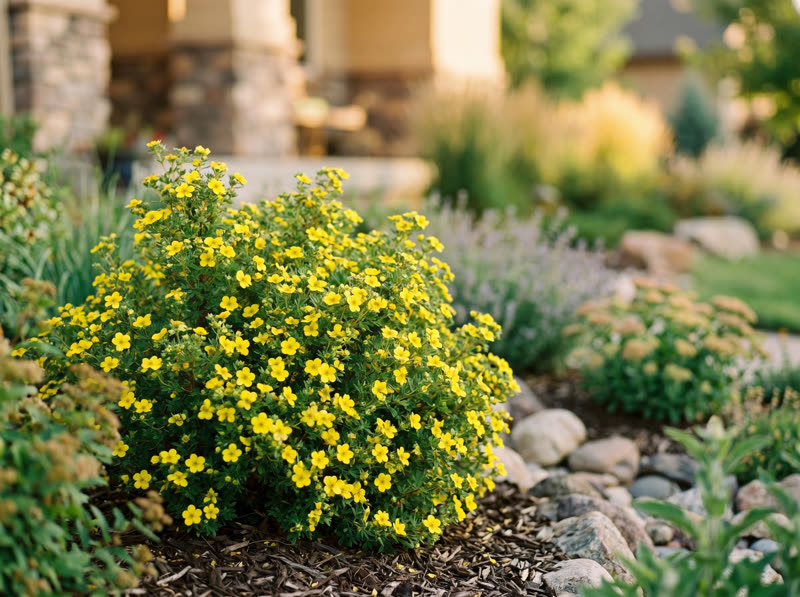
Potentilla fruticosa
Nonstop yellow bloom through drought, heat, and poor soil. Cut back by a third every spring.
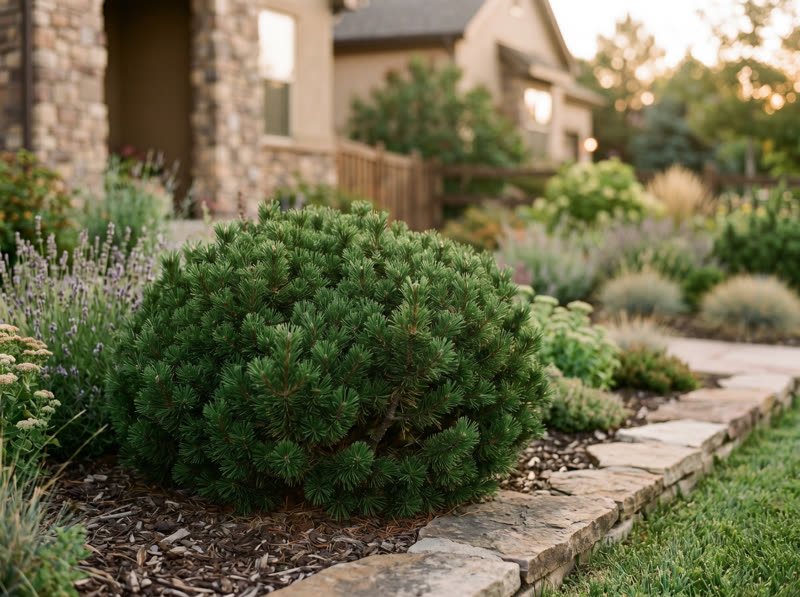
Pinus mugo
Dwarf varieties stay in scale for foundation beds. Candle-prune in June to keep tight.
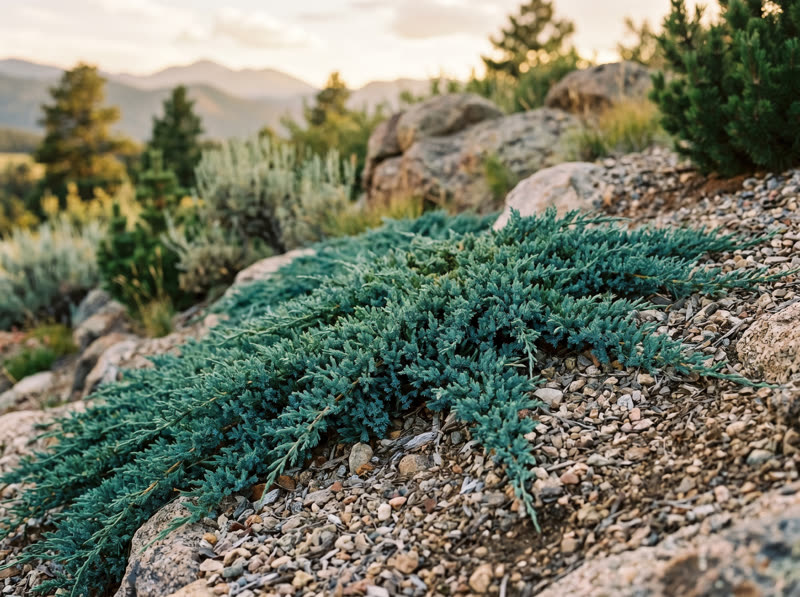
Juniperus horizontalis
Blue-green groundcover shrub for slopes. 'Blue Chip' and 'Wiltonii' are our go-tos.
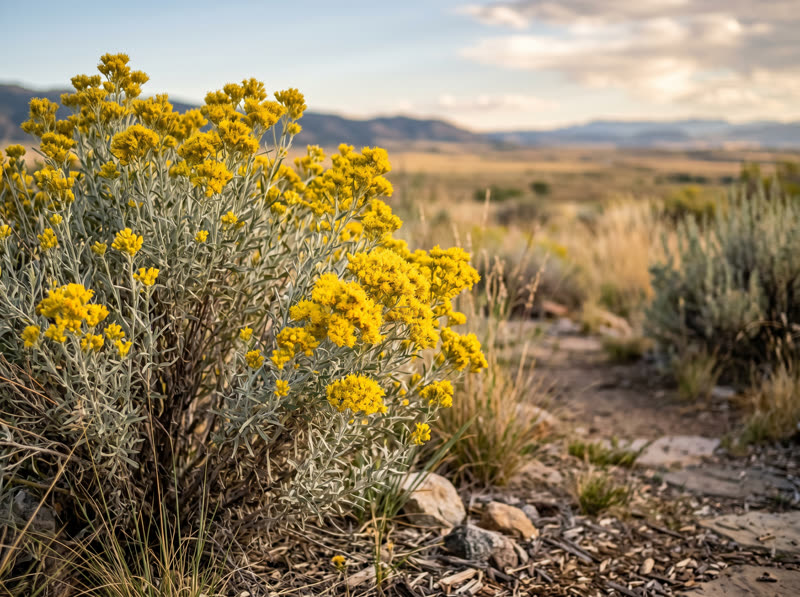
Ericameria nauseosa
Native. Silver foliage, riot of yellow bloom in fall when nothing else is flowering. Tough as granite.
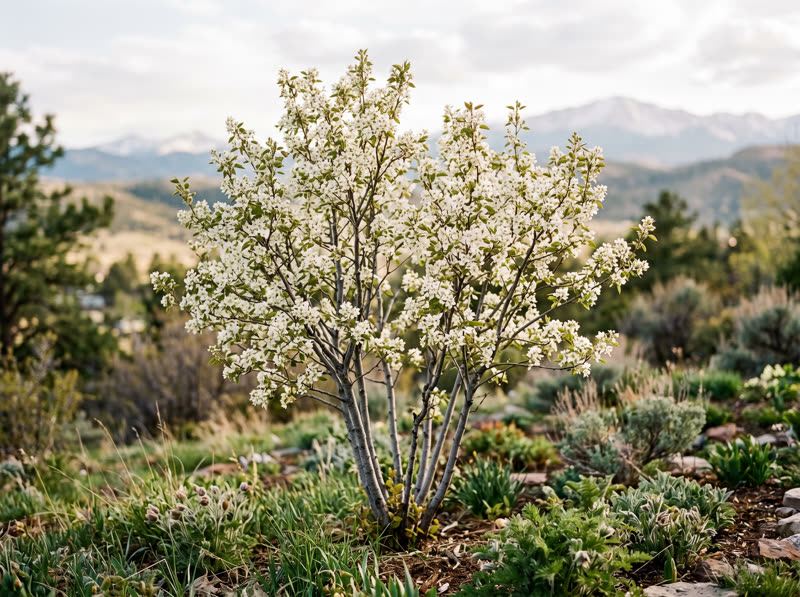
Amelanchier alnifolia
White spring bloom, edible berries for birds, orange fall color. Multi-stem or single-trunk.
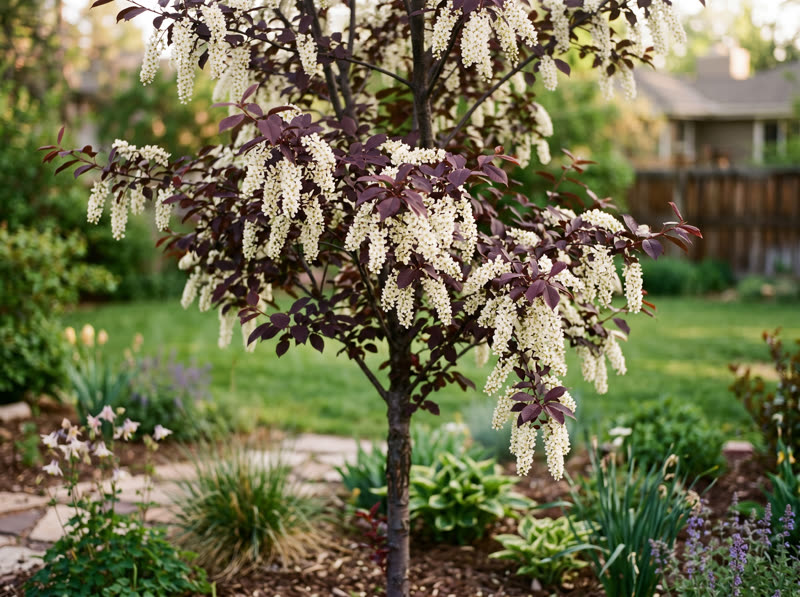
Prunus virginiana
Native. Fragrant white panicles, dark purple fruit. 'Canada Red' offers burgundy foliage all summer.
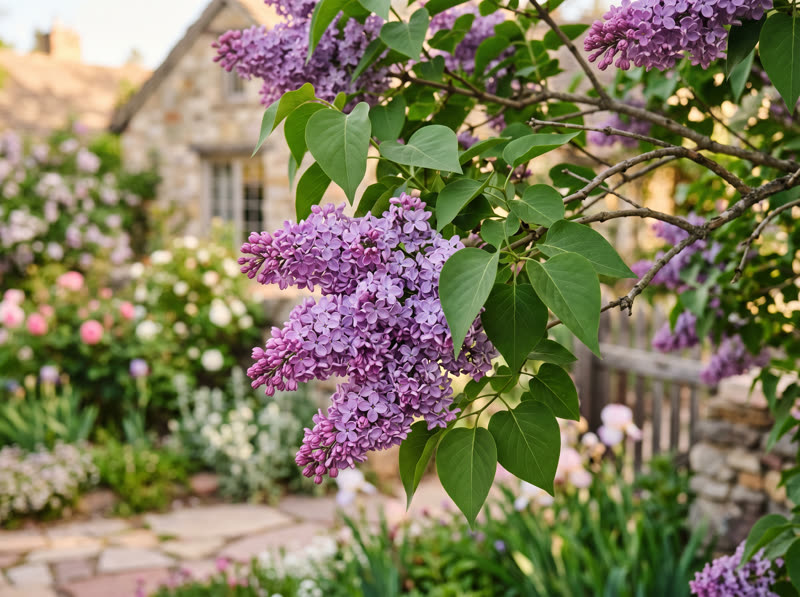
Syringa vulgaris
Old-fashioned and unbeatable. Prune right after bloom, feed lightly. Long-lived in Colorado soils.
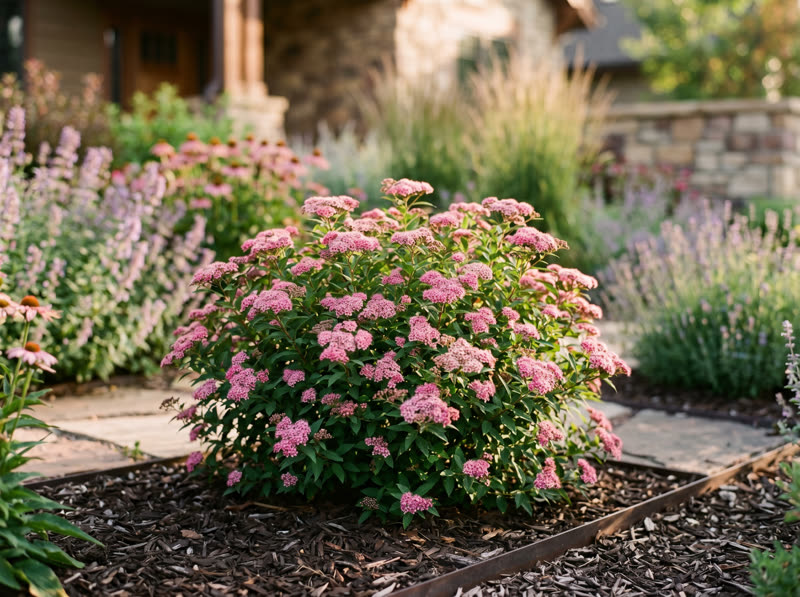
Spiraea japonica
Compact, pink-flowered, easy. Deer rarely bother it. A reliable filler in mixed beds.
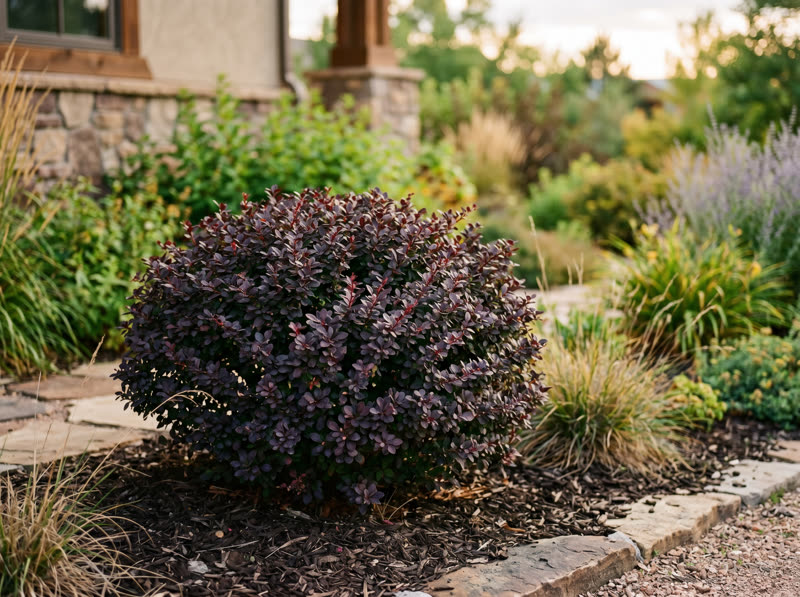
Berberis thunbergii
Burgundy foliage for color contrast. Deer-proof. Use sterile cultivars to avoid reseeding.
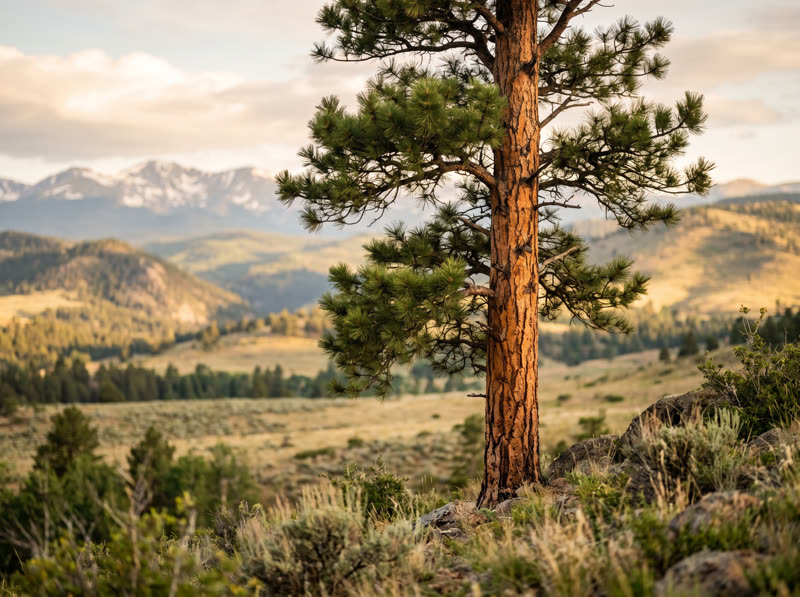
Pinus ponderosa
Our namesake. Native to the Front Range, cinnamon bark smells of vanilla. Slow to establish, generational once rooted.
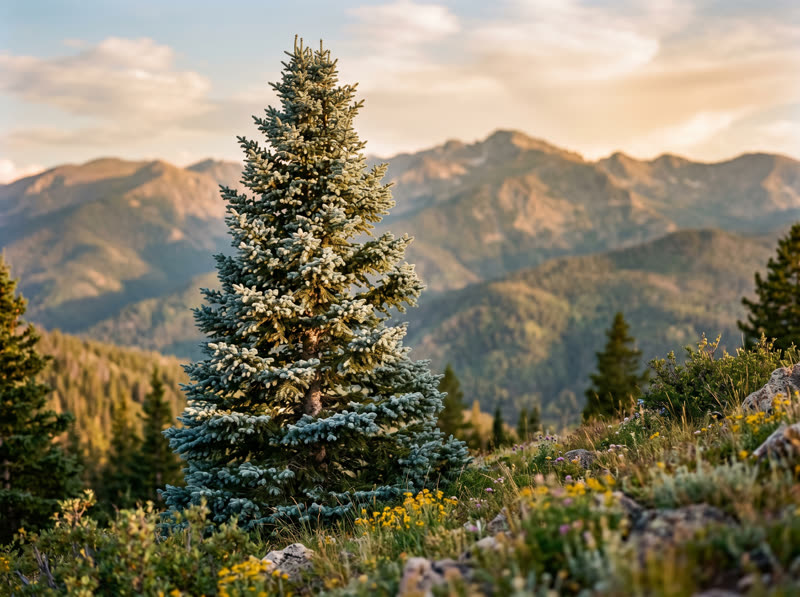
Picea pungens
The state tree. Give it space — 20+ feet from structures. Vulnerable to needlecast in damp summers.
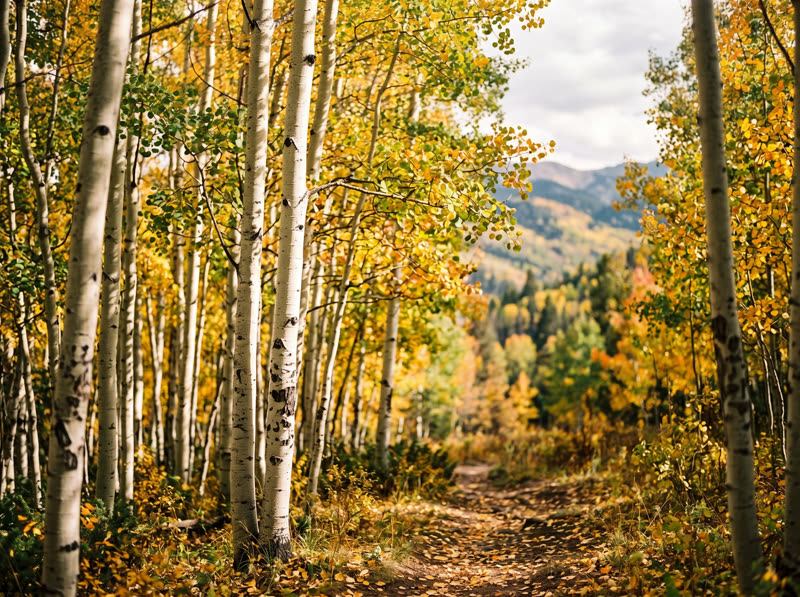
Populus tremuloides
Plant in groves, never as singles. Best at higher elevations — in town, keep soil cool with mulch.
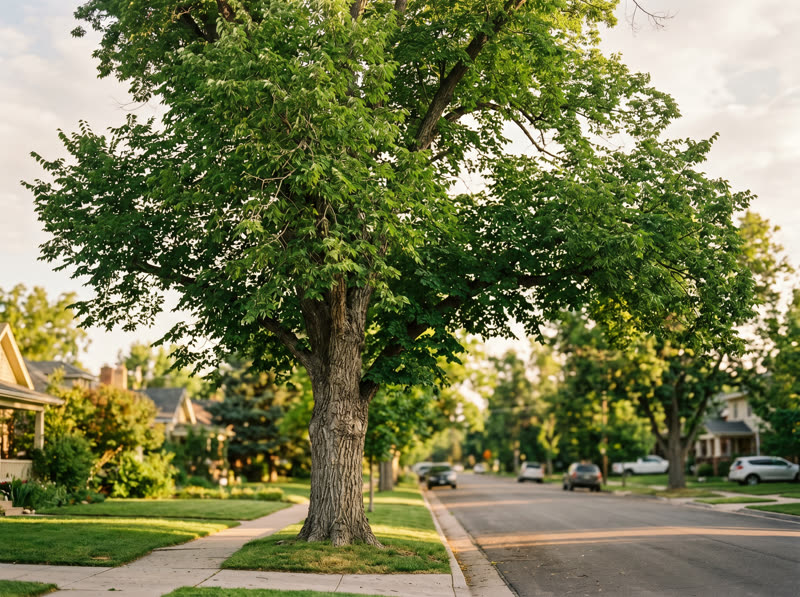
Celtis occidentalis
Underrated. Handles wind, clay, drought, and alkaline soils. A smart replacement for failing ash.
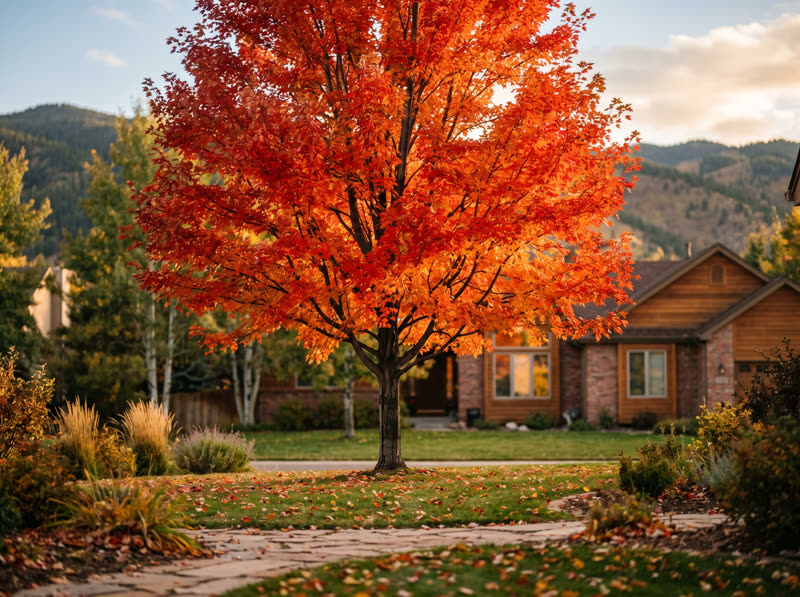
Acer × freemanii
Reliable fall color where sugar maple struggles. Water deeply in first three years.
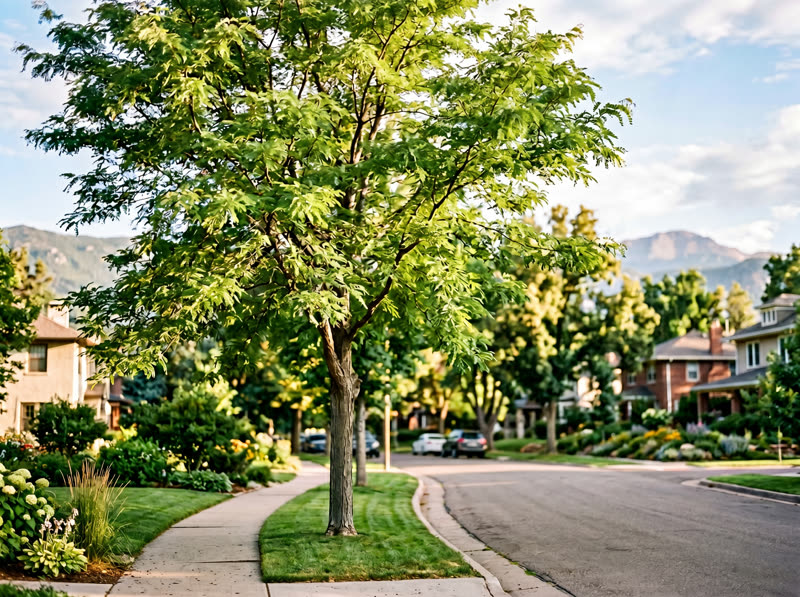
Gleditsia triacanthos inermis
Dappled shade that lawns tolerate. Thornless, seedless. A good street tree.
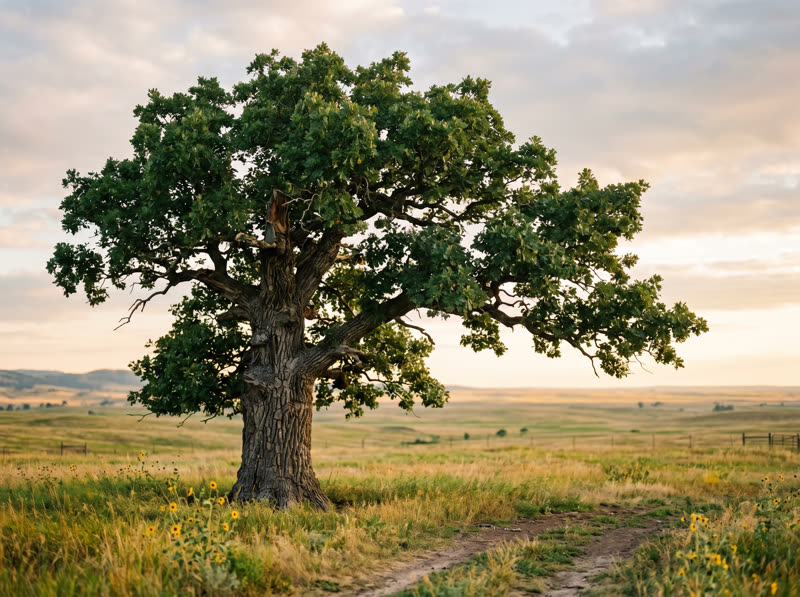
Quercus macrocarpa
Possibly the toughest shade tree for the Front Range. Tolerates fire, drought, alkaline soil. A 200-year investment.
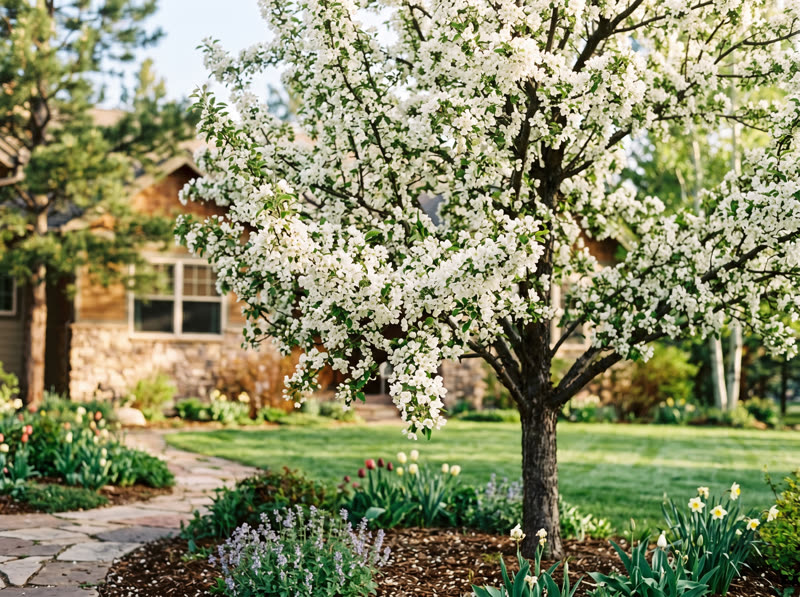
Malus 'Spring Snow'
Fragrant white bloom, fruitless (no driveway mess). Disease-resistant. A great small-yard specimen.
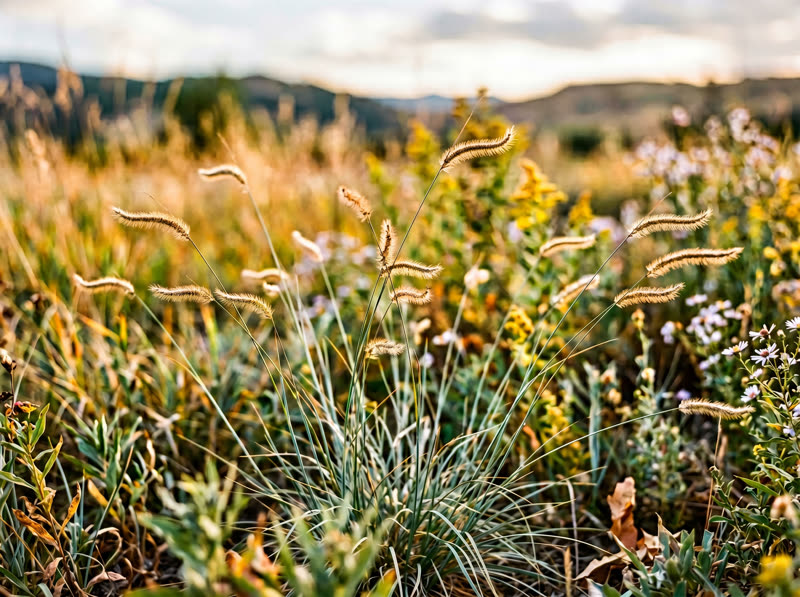
Bouteloua gracilis
Native. Eyelash seed heads in August, straw-blonde in winter. A true lawn alternative in sunny yards.
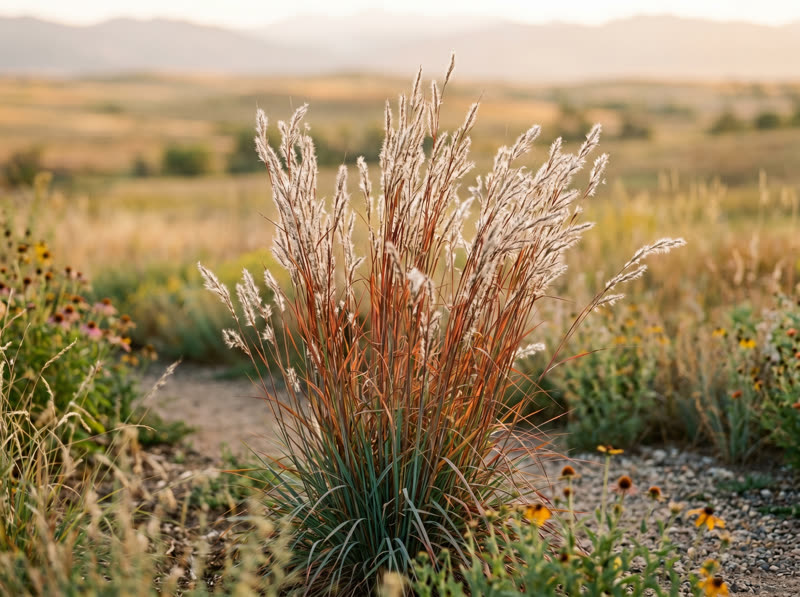
Schizachyrium scoparium
Blue-green summer color, coppery-red fall, silvery seed heads. 'The Blues' holds upright.
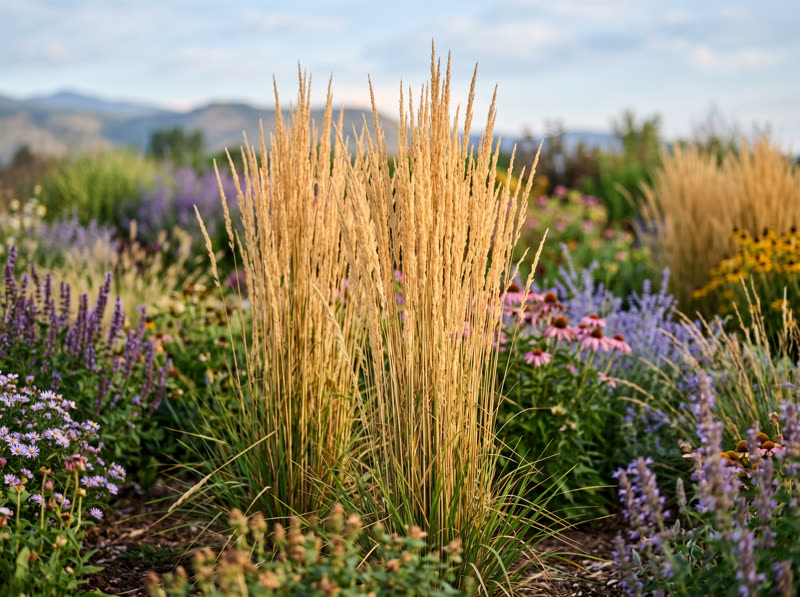
Calamagrostis × acutiflora
'Karl Foerster' is our most-used grass. Stiff, vertical plumes appear in June and last until we cut them in March.
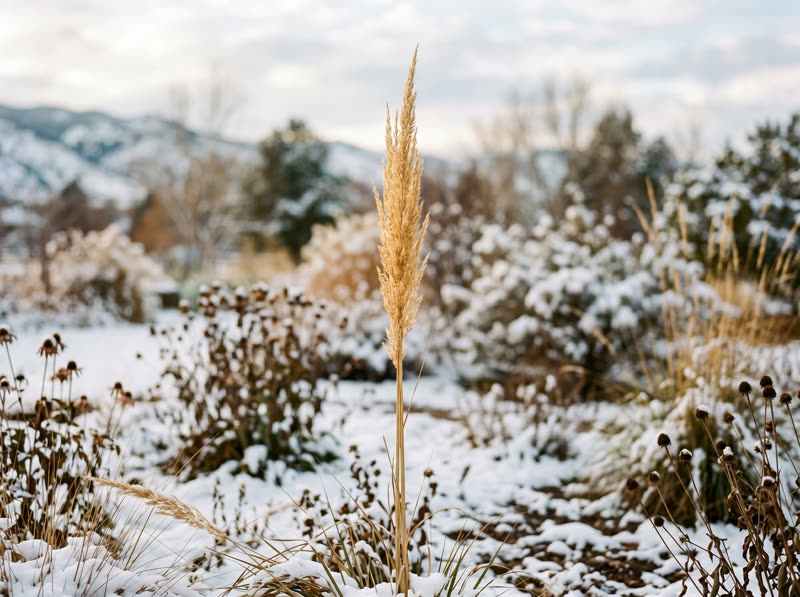
Calamagrostis 'Karl Foerster'
Perennial plant of the year 2001 — still the standard. Works with anything, looks good in winter snow.
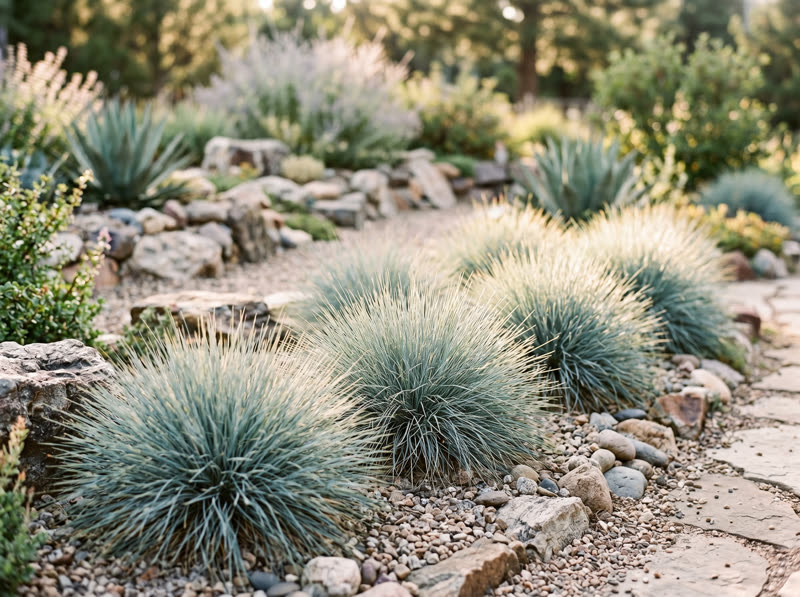
Festuca glauca 'Elijah Blue'
Porcupine-blue mounds for front-of-bed repetition. Divide every 2–3 years to keep vigorous.
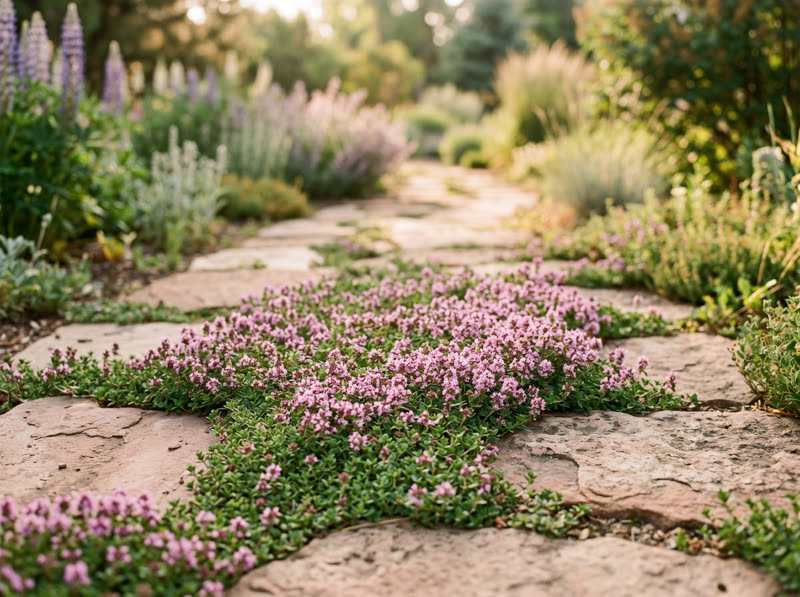
Thymus serpyllum
Walkable, fragrant, bloom pink or white. Plant between flagstones and let it spill.
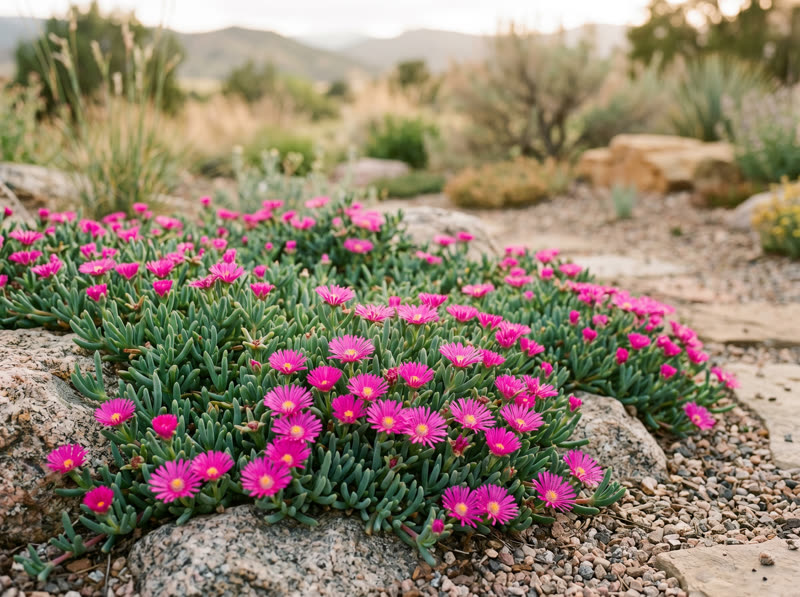
Delosperma cooperi
Neon-magenta blooms across jelly-like succulent foliage. Needs sharp drainage — not for low spots.
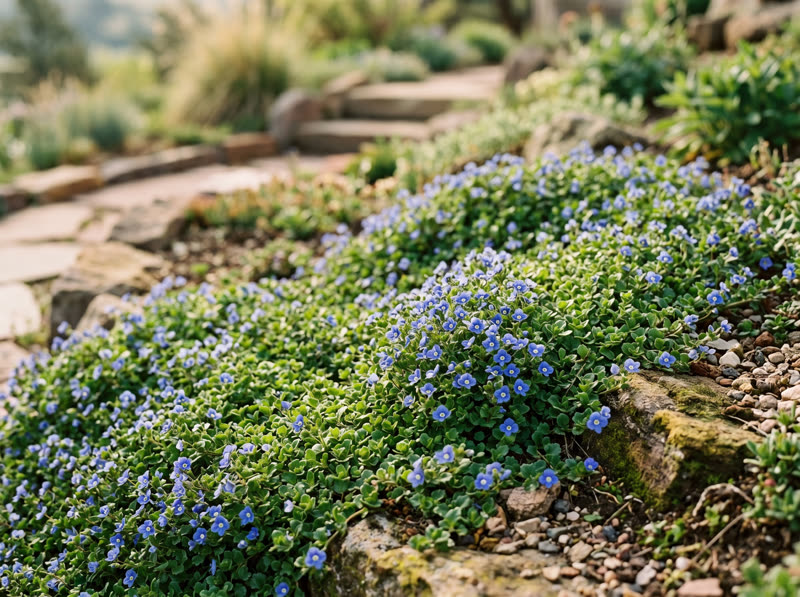
Veronica pectinata
Cobalt-blue mat for slopes. Handles foot traffic in spring, becomes crispy-tidy in summer.
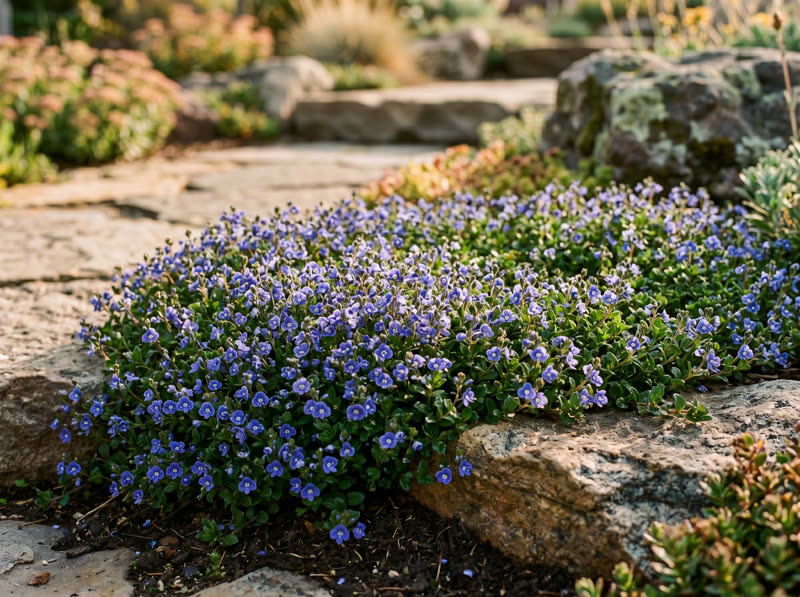
Veronica liwanensis
Plant Select introduction. Evergreen, walkable, deep blue spring carpet.
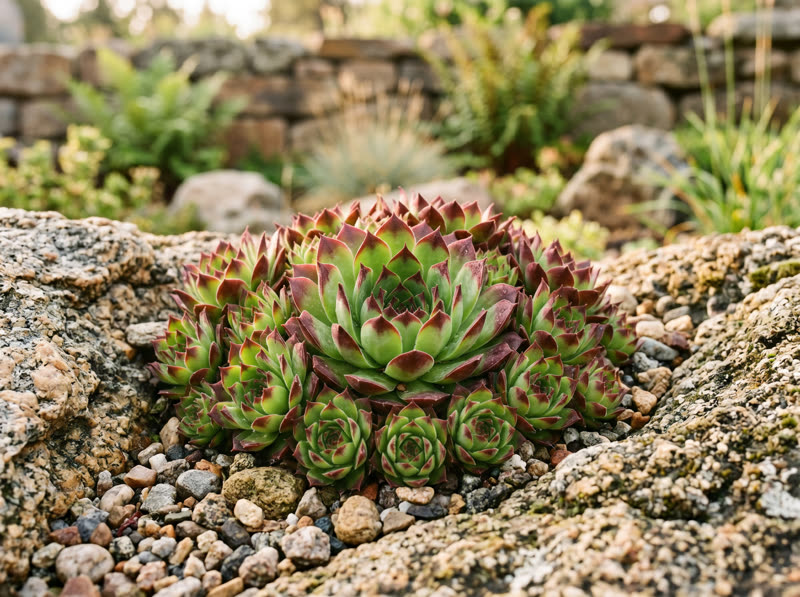
Sempervivum tectorum
Architectural rosettes for crevices, wall tops, and rock gardens. Endlessly propagates itself.
Tell us what you like, what you hate, and where the afternoon sun hits. We'll design a bed that uses these plants in proportions that work together year-round.